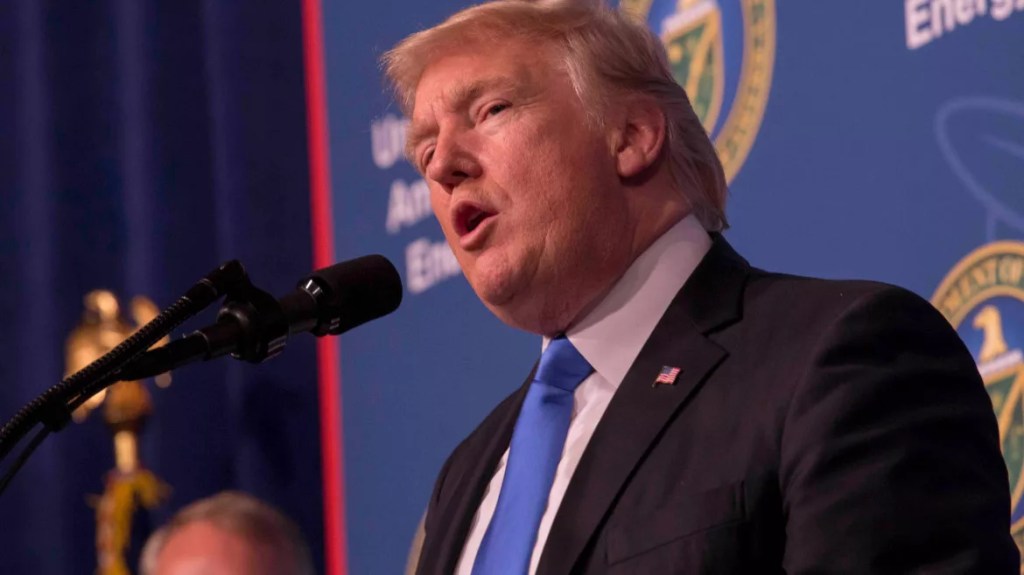
Ruling invalidates “Liberation Day” global tariffs imposed by Trump
The U.S. Supreme Court ruled on Friday that the emergency tariffs imposed by President Donald Trump violated federal law.
Beginning last February, Trump implemented the tariffs under the International Emergency Economic Powers Act of 1977, becoming the first president to do so. The 6-3 ruling states that the Constitution “very clearly” provides Congress with the power to impose taxes, which include tariffs.
As such, Trump’s action to unilaterally impose global tariffs, which include the “Liberation Day” tariffs placed on nearly every country, exceeded his authority.
“It is also telling that in IEEPA’s half century of existence, no President has invoked the statute to impose any tariffs, let alone tariffs of this magnitude and scope,” wrote Chief Justice John Roberts. “That ‘lack of historical precedent, coupled with the breadth of authority’ that the President now claims, suggests that the tariffs extend beyond the President’s ‘legitimate reach.’”
Tariffs have resulted in higher input costs for the HVAC industry, mainly due to steel, aluminum, and copper price increases. They also created supply chain volatility as contractors scrambled to find alternative sources, while many manufacturers raised prices to compensate. As a result, many contractors had to either pass on any additional expenses to customers or eat the cost themselves.
As The ACHR NEWS previously reported, demand for replacements shifted toward repairs in part from the tariffs, with consumers delaying replacements amid high prices. Refrigerant shortages and other economic factors also played a role in this shift.
The Supreme Court’s ruling could provide relief to some of those pain points, but not all. Tariffs imposed under Section 232 of the Trade Expansion Act of 1962 on steel, aluminum, and copper are not affected by the ruling and will remain in place.
The decision also doesn’t prevent Trump from imposing tariffs. In response to the Supreme Court decision, Trump announced a new 10% tariff under Section 122 of the Trade Act of 1974. Heating, Air-conditioning & Refrigeration Distributors International said the court’s decision is a “significant rebuke” of the president’s power but is narrow in scope and “does not affect the primary tariff programs impacting HVACR equipment.”
“It is unclear if the new 10% tariff will be layered on top of existing Section 232 and 301 tariffs,” HARDI wrote on its website.
Administration officials have previously stated they are seeking alternative pathways, though these will likely carry stricter limitations.
“President Trump’s new tariff creates uncertainty around what it means for tariffs and exemptions outside the scope of the court’s ruling. As always, [Air Conditioning Contractors of America] will continue to monitor developments and advocate for policies that support contractors and their customers,” said ACCA officials.
Regarding the revenue collected by the tariffs, the ruling offers no guidance on how refunds will work.
“The United States may be required to refund billions of dollars to importers who paid the IEEPA tariffs, even though some importers may have already passed on costs to consumers or others,” wrote Justice Brett Kavanaugh in the dissenting opinion. “As was acknowledged at oral argument, the refund process is likely to be a ‘mess.’”
As of last December, tariff revenue totaled $134 billion. According to reporting from Reuters, more than $175 billion in U.S. tariff collections could be refunded. Importers will likely rush to claim refunds from the U.S. Customs and Border Protection agency on import duties they paid over the last year. Lower courts allowed the tariffs to continue until the Supreme Court ruled on the case.
Earlier this month, the House of Representatives voted to terminate tariffs on Canadian imports. The bill was sent to the Senate on Feb. 12 and referred to the Committee on Finance.
According to the Committee for a Responsible Federal Budget, the decision means the country will be about $2 trillion deeper in debt.
“Whatever one feels about the tariffs themselves, the country needs that $2 trillion in fiscal improvements, all of which should be dedicated to deficit reduction,” said Maya MacGuineas, president of the Committee for a Responsible Federal Budget, in a written statement. “Congress should work to quickly replace at least that amount — whether through a border adjusted cash flow tax, cuts to tax breaks, or spending reductions.”
 Boykin Air